You keep smelling it.
Somewhere near the laundry room, or the back corner of the basement, or the upstairs hallway. Musty. Damp. Like a cottage that's been closed up all winter.
You've looked. You moved the boxes, checked under the sink, pulled the washer out. Nothing. No black spots, no green fuzz, no water on the floor.
So now what? You're being asked to pay a few hundred dollars for someone to come look at a house you already looked at. Fair question: what are they actually going to do that you didn't?
Here's the honest answer.
What a Mold Inspection Consists Of
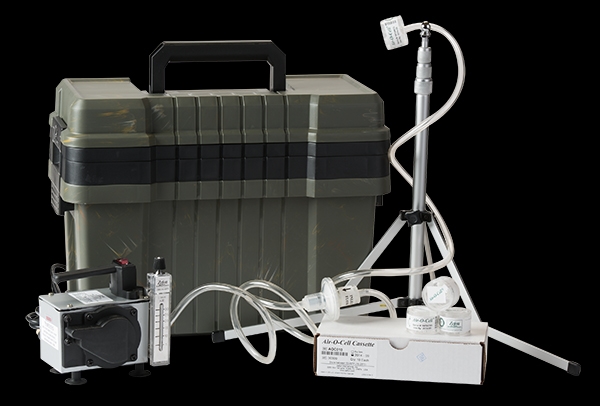
A mold inspection consists of four parts: an interview about the home's moisture history, a visual inspection of high-risk areas, moisture and humidity readings using meters and thermal imaging, and air sampling sent to a lab. It ends with a written report identifying where moisture is coming from and what needs to be repaired.
That's the short version. The part that matters is what happens inside each of those steps, because that's where a real inspection separates from a fast one.
First: Do You Even Need to Hire Someone?
Not every patch of mold needs a professional. Anyone who tells you otherwise is selling something.
Toronto Public Health, working from CMHC guidance, uses area as the deciding line:
| Size of the affected area | What to do |
|---|---|
| Under 1 m² | Clean it yourself with unscented detergent, gloves, a mask, and eye protection. Dry it thoroughly afterward. |
| Up to 3 m² | Still manageable by a homeowner, but take real precautions. |
| 4 m² or larger | Bring in someone trained in remediation. |
One square metre is roughly the size of a bath towel laid flat. If you found a patch that size behind the toilet, clean it and fix whatever's wetting it. You don't need an inspector for that.
But those numbers only apply to mold you can see. That's the catch, and it's the reason you're reading this page.
A musty smell with no visible source isn't a small-area problem or a large-area problem. It's an unknown-area problem. You can't measure what you can't find, and the growth causing that smell is usually somewhere you physically cannot look — inside a wall cavity, above a ceiling, under flooring, or in the attic.
That's what the inspection is for. Not to confirm the obvious. To find the part you can't reach.
What Actually Happens During the Visit
It starts with questions, not equipment
Before anything gets switched on, a good inspector asks about the house's history.
Any roof leaks? Basement ever take on water? Old plumbing failure, dishwasher overflow, washing machine hose let go? Windows sweat in the winter? Did a previous owner mention anything?
This isn't small talk. Water travels. A leak that happened three years ago in a spot that's dry now can still be feeding growth two rooms over. Skipping this conversation means searching a whole house blind instead of starting where the evidence points.
Then the walkthrough
The visual inspection covers the places moisture collects: basement corners and rim joists, under kitchen and bathroom sinks, around window frames, behind toilets and tubs, laundry areas, attic sheathing, HVAC vents and ductwork, and any ceiling underneath a bathroom.
What's being looked for isn't just mold. It's the evidence that mold is likely:
- Staining or discolouration
- Bubbling or peeling paint
- Swollen baseboards or soft drywall
- Cracked, missing, or separated caulking
- Rust on fasteners and fittings
- Condensation on windows, pipes, or cold walls
- Wet or compressed insulation
A wall can look perfect and still be soaked inside. Paint hides a lot. That's why the walkthrough is only step one.
Then the readings
This is the part most homeowners have never seen, and it's the part that separates a real mold inspection from a glance around the basement.
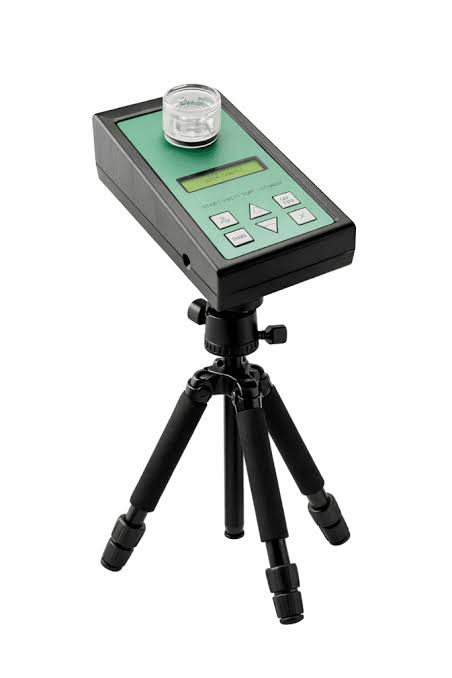
Moisture meter. Pressed against walls, floors, and ceilings, it reads how much moisture is actually inside the material. It catches wet drywall weeks or months before anything appears on the surface. Balwinder runs it across every suspect surface, not just the ones that look wrong.
Thermal imaging camera. It reads surface temperature, and wet material holds temperature differently than dry material. So a cold patch in the middle of a warm wall becomes a flag worth checking. Important: the camera does not see through walls, and it cannot see mold. Anyone who tells you their camera detects mold is overselling it. It shows you where to point the moisture meter next.
Hygrometer. Measures relative humidity room by room. Most Canadian homes sit comfortably between 30% and 50%. A basement holding 65% all summer doesn't have a mold problem yet — it has the conditions to grow one, which is worth knowing before it happens.
If you want the longer version of why tools and time matter this much, Kirpa's breakdown of what separates a basic inspection from a thorough one covers it. The short version: an inspector who's out the door in 45 minutes did not take moisture readings. There isn't time.
Then the air sampling
Air samples get taken indoors, along with a control sample from outside the house. Both go to a third-party lab.
The outdoor sample matters more than people expect. Mold spores exist everywhere — in your yard, in the park, in every building you walk into. A lab result showing spores in your living room means nothing on its own. It only means something compared against what's normally floating around outside your front door.
At Kirpa, sampling happens on every mold inspection. It's built into the price rather than pitched on site as an extra, which means there's no upsell conversation while someone's standing in your basement, and no lab invoice showing up afterward that you weren't expecting.
Then the report
You should end up with a written document — not a verbal summary at the door.
A useful report tells you:
- Which areas were inspected, and which ones couldn't be
- What limited access, if anything
- Visual findings, with photos
- Moisture readings and humidity levels
- Lab results, explained in plain language
- The suspected moisture source
- What to repair, in priority order
Watch out for reports that are mostly lab numbers and species names with no explanation of the building. A page that says Cladosporium detected tells you nothing actionable. A page that says elevated moisture in the north basement wall, consistent with grading pushing water toward the foundation tells you what to fix.
Because that's the thing almost everyone gets backwards: the species barely matters. Black, green, white, brown — it all needs the same response. Find the water, stop the water, remove the damaged material. Mold doesn't grow without moisture. Kill the moisture and you've solved it. Chase the species name and you've bought a lab report.
Where It's Usually Hiding
Two spots come up over and over on musty-smell calls, and neither one is where the homeowner is looking.
The bathroom fan venting into the attic. The fan works. You can hear it. You can feel air moving. What you can't see is that the duct terminates in the attic instead of outside the roof, so every shower for the last decade has been pumping warm, wet air into a cold, unventilated space. The sheathing grows mold, and the smell drifts down into upstairs bedrooms. Homeowners search the bathroom for months. The problem is above the ceiling.
Behind finished basement drywall. A finished basement is a sealed box. Moisture gets in through the foundation, sits in the wall cavity against the insulation, and grows quietly behind drywall that looks completely fine from the room side. No stain, no bubble, no discolouration. The meter finds it in about ten seconds. Your eyes never will.
Notice the pattern in both: the smell shows up in one room, the source is in another. That's normal. Air moves through a house, and it carries the smell with it. Searching where you smell it is the single most common reason homeowners give up and assume they're imagining things.
You're not imagining it. You're just looking in the wrong room.
What a Mold Inspection Can't Tell You
Anyone promising certainty is lying to you, so here's the honest boundary.
It can't see inside every wall. Without cutting drywall, no inspection can guarantee that every concealed cavity in your house is clean. It dramatically narrows where the problem is. It doesn't x-ray your home.
It can't tell you if mold made you sick. An inspector documents building conditions. That's it. If someone in your house has a persistent cough, wheezing, chest tightness, sinus symptoms, or worsening asthma, that's a conversation for a doctor — and it should happen regardless of what any inspection finds. Health Canada notes that infants, seniors, pregnant people, and anyone with allergies, respiratory conditions, or a weakened immune system are the most likely to react to mold exposure. An inspection tells you about the building. A physician tells you about the person.
It can't fix anything. An inspection identifies and documents. Repair and remediation are separate work, done by someone else.
That last one is worth sitting with, because it's not a limitation. It's the point.
Who Should Be Doing the Inspection
Here's something the top-ranking pages on this topic won't tell you plainly: most of them are written by companies that remove mold for a living.
Think about what that means. The company deciding whether you have a mold problem is the same company that gets paid to remove it. That's not a scandal — plenty of them do good work. But it's a structural conflict, and you should know it exists before you call.
Kirpa does inspection and testing only. No remediation services, no removal division, no referral arrangement with a remediation company. If Balwinder tells you there's a problem, there's a problem. If he tells you the smell is a dry-trap floor drain and you should pour a cup of water down it, that's the whole invoice.
The other thing to know: home inspection is not a regulated profession in Ontario. No provincial licence, no mandatory exam, no required training. Anybody can print a business card. That puts the verification work on you — certifications, insurance, sample reports, actual reviews. Kirpa's guide on how to pick a good home inspector walks through exactly what to check and what to ask before you book anyone.
For reference, Balwinder is InterNACHI certified, licensed and insured, and holds a ★★★★★ 5.0 star rating across 98 Google reviews.
What It Costs and How Long It Takes
| Service | Time | Cost |
|---|---|---|
| Mold inspection (standalone) | 1–2 hours | $149 - $449 |
| Full home inspection | About 4 hours | Quoted separately |
| Air sampling + third-party lab analysis | Results in a few business days | Included |
The $149 - $449 range depends on how many rooms are affected. Air sampling and lab analysis are inside that number, not added to it.
And it can be booked on its own. You don't need to buy a full home inspection to get the moisture and air quality check. If you already own the house and you just want to know what's causing the smell, that's a standalone service. Details are on the mold inspection and testing page.
Worth comparing against the alternative. A slow leak inside a wall doesn't stay a small repair. It works through drywall, into the framing, through the insulation, and by the time it's visible you're pricing out remediation, materials, and labour instead of a plumber's afternoon.
Frequently Asked Questions
Is a musty smell always mold?
Not always. Dry floor drains, standing water in a sump pit, and damp crawl spaces produce similar odours. But a persistent musty smell means moisture is present somewhere, and moisture is the one thing mold needs. It's always worth finding the source.
Does a regular home inspection include mold?
Not in any real depth. A standard home inspection notes visible mold and obvious water damage as part of a whole-house review. It doesn't include air sampling, lab analysis, or a systematic moisture survey of high-risk areas. Those are what a dedicated mold inspection adds.
Do home mold test kits work?
They'll grow something. Spores are everywhere, so most kits produce a positive result whether or not you have a problem. What they can't tell you is where the moisture is coming from, how far it extends, or which materials need to come out — which is everything you actually need to know.
Can a thermal camera see mold behind a wall?
No. It reads surface temperature differences that may indicate moisture. It doesn't see through walls and it doesn't detect mold. It's a tool for deciding where to check next, not a diagnosis.
Does black mold require special testing?
Colour doesn't determine risk or species, and the response is the same regardless: find the moisture source, stop it, and remove the damaged material. "Black mold" is a marketing phrase far more often than a lab finding.
How soon do I get results?
Visual and moisture findings are documented in your report. Lab results from air samples come back within a few business days and are included in the final report.
Book a Mold Inspection
If something in your house smells musty and you can't find it, you've likely already checked everywhere you can reach. The rest of it needs a meter.
Serving Brampton, Mississauga, Toronto, and the surrounding GTA. Inspection and testing only — no remediation, no upsell, no reason to find a problem that isn't there.
Schedule Your Inspection →Or call (647) 474-5626